Online Programs
A virtual school in general refers to a program in which your child is at home, but takes courses over the Internet. These virtual schools offer online programs and often full curricula. They are usually administered by a public or private school. Thus, children enrolled in these programs are effectively enrolled in a school and skirt the definition of a homeschooled student. There are some controversies regarding these programs, but they do provide an alternative that is appropriate for some families. Learn more about how these programs work, what to expect, and how to get the most out of them.
Online Homeschool Programs & Curricula
Calvert School
Calvert School is an independent lower and middle school with a curriculum that is designed to challenge capable boys and girls. Children are prepared for secondary school and for a lifetime of learning by mastering the academic basics. Through its financial aid and recruitment efforts, Calvert strives to offer an educational opportunity to students of all socio-economic backgrounds.
eTAP
eTAP Teaching Assistance Program is a premiere site for online instruction designed specifically to maximize student learning.
K12
Founded in 1999 by William J. Bennett, along with other leaders, K12 offers a traditional program of learning using online technology and traditional content. Many states are offering the K12 program through Virtual Acadamies, with programs that are free of charge to participating families.
Paradigm Virtual Academy
Headquartered in Indianapolis, Indiana, PVA uses the tested and proven PAC curriculum, but in a virtual, online setting. Students with Internet access can now benefit from the PAC program from anywhere in the world.
e-Tutor
eTutor Virtual Learning is an online school providing an in-depth curriculum to students in grades K-12 anywhere in the world. Access to the program is through subscription. Subscribers become part of an online learning community held in high regard by some of the nation's best educators. Ideal for homeschoolers, international students, student athletes and performers, health-impaired, gifted-talented students and those who want to increase or refresh their educational skills, eTutor provides lesson modules in the areas of Language Arts, Mathematics, Science and Social Studies. Subscribers have the option of working at the level of their choice.
Central California Connections Academy
Central California Connections Academy (CenCA) provides a new form of public school that students can attend from home. This is a unique program that combines strong parental involvement, the expertise and accountability of publicly funded education, and the flexibility of online classes. Central California Connections Academy is a charter school authorized in May 2006 by Alpaugh Unified School District. CenCA serves students in grades K–12 who reside in Fresno, Inyo, Kern, Kings, and Tulare counties. Parents pay no tuition for students to attend Central California Connections Academy. Students are considered to be enrolled in a public school. CenCA provides textbooks and other curriculum materials.
Sycamore Tree Center for Home Education
The Sycamore Tree, Inc. was incorporated in California in 1982, and provides homeschool educational services to students in grades K-12. This is a text-based homeschool computer program. They also provide testing services.
Heritage Home School Academy
Heritage Home School Academy is an accredited Christian home school option for families across the United States and globally. Their school is focused on family, quality education, and the success of children preschool through 12th grade. They offer traditional Christian home school curriculum, and also, Christian online curriculum. Heritage Home School Academy’s traditional and online curriculum programs give parents options. Programs are affordable, accredited and can be adjusted for each child’s specific learning needs.
Future School
Future School online learning systems support your entire family in both the classroom and the home using only qualified teachers to ensure its educational services. They offer tutoring students in the home, classroom and after school facilities, providing both face-to-face, telephone and online assistance in the two core areas of literacy and numeracy. Future School has also many years experience in the development of Basic Skill Tests in mathematics and English covering years 3, 5, and 7, including the materials, delivery, marking, psychometrics and reporting to Education Departments, schools, and parents.
CLASS Homeschools
CLASS is a pioneer of the modern home school movement and has helped thousands of families to get started—and succeed—in home schooling. CLASS consists of thousands of home schools throughout the United States and around the world, with students ranging in age from four to adult. CLASS is accredited by the National Association of Private Schools. Graduates are being accepted by leading colleges, universities, and military academies.
Bridgeway Academy
Bridgeway Academy has been a trusted homeschooling academy since 1989, meeting the highest state and national accreditation standards possible. Bridgeway’s goal is to provide families with everything needed to give a child the best homeschool education available. Whether looking for a curriculum founded on Christian principles, or one that focuses solely on academics, Bridgeway is a proven homeschool resource that will work with families to produce a customized and affordable plan that universities are taking quite seriously.
Catholic Virtual
A program of Virtual Schools of Excellence, Catholic Virtual is an accredited, online program. They are committed to offering a comprehensive approach to e-learning in a faith-filled environment. The K-12 Program provides college preparatory and career readiness curriculum for all students. The Catholic Religious Education classes follow the standards and guidelines set by the United States Bishops.
Capistrano Connections Academy
Capistrano Connections Academy provides a new form of public school that students can attend from home. This is a unique program that combines strong parental involvement, the expertise and accountability of publicly funded education, and the flexibility of online classes. Capistrano Connections Academy (CapoCA) is a charter school authorized by the Capistrano Unified School District. CapoCA serves students in grades K–12 who reside in San Diego, Orange, Riverside, Los Angeles, and San Bernardino counties. Grades K–10 are fully accredited and grades 11–12 have been provisionally accredited by the Accrediting Commission for Schools of the Western Association of Schools and Colleges (WASC). Parents pay no tuition for students to attend Capistrano Connections Academy. Students are considered to be enrolled in a public school. CapoCA provides textbooks and other curriculum materials.
Support
CAVA K12 - LA County
All members of this group live in or near Los Angeles County, have children who are enrolled in CAVA (California Virtual Academy) or use K12 curriculum on their own, or are interested in the programs.
K12 Large Families
This group is for large families using the K-12 curriculum created by Dr. William Bennett. Both homeschooling families and Virtual School families are welcome. It is particularly intended for families with more than 3 children in K-12 as well as additional teens, toddlers and babies. Discussions include both the curriculum and the challenges of implementing it in a large family.
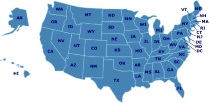
Looking for Another State?
Featured Resources
As an Amazon Associate, we earn from qualifying purchases. We get commissions for purchases made through links on this site.

The Living Page: Keeping Notebooks with Charlotte Mason
Charlotte Mason believed that children need to be trained to see, to have their eyes opened, in order to find joy in life. This work explains the value of using the method of writing in journals or notebooks, as derived from the expansive work of Charlotte Mason. You'll find tips to help your children practice putting their knowledge, thoughts, and pictures down on paper, helping them to retain information better, create something beautiful, and strive for retention.

Pass Your California DMV Test Guaranteed! 50 Real Test Questions! California DMV Handbook
This book contains the 50 most common questions and answers to the California DMV Written Test. Written by a former DMV classroom instructor and test creator, this straight forward book tells you the most likely questions and answers that will appear on you exam. Typically, at least 70-80% of the questions you encounter will come from these high frequency questions. Pass your test today!

A Different Kind of Teacher: Solving the Crisis of American Schooling
In 1991, shortly after receiving both the New York State and New York City Teacher of the Year Awards, John Gatto resigned to begin a new career as an education reform advocate. In this collection of 16 essays, Gatto analyzes the problems of American education and suggests solutions for revitalizing the system — prescriptions that run counter to current trends.

The Letter Factory Game
Teaches Phonics! The race is on! With two games in one, children play together and learn letter names and sounds with actions and music. Wacky Professor Quigley guides players every step of the way so no reading is required! Games automatically adjust to skill level, to keep children learning at just the right pace! 2 Games in 1: Counting Colors & Letters: Learn letter names and sounds by matching color cards to move around the board. Leaping Letters: Listen to the name or sound and then find th...

But What About Socialization? Answering the Perpetual Home Schooling Question: A Review of the Literature
This book by Dr. Susan A. McDowell uses research, statistics, and the experiences of homeschooling families to answer questions and counter myths about homeschooling and socialization. Read through a discussion of the multiple meanings of socialization, what parents, leaders, and children have to say about the issue, and what the research shows.