How To Homeschool
What's Popular
Classical Homeschoolers of the Silicon Valley
Foothills Unschooling Network
San Diego Waldorf at Home
Santa Monica West LA Child Led Learners
Unschool LA
Western Region Unschoolers
California Unschoolers
Washington State Homeschool Testing
Homespun Learning
West River Academy
Sycamore Tree Center for Home Education
Learning Circle Cooperative Homeschool Support
Capistrano Connections Academy
CAVA K12 - LA County
Butte County Unschoolers and Eclectics
Resources

Visual Brainstorms

The Letter Factory Game
Phonics Pathways

Montessori Play And Learn : A Parent's Guide to Purposeful Play from Two to Six
Now, Lesley Britton, the leading Montessori practitioner in England for more than twenty years, will show parents how to bring Montessori home. If you would like to facilitate the development of your child's unique personality, make it possible for him to develop to his full intellectual capacity, and help him become socially and emotionally well adjusted, then this is the book for you.
Montessori Play and Learn is packed with ideas, activities, and games that can fit into your normal routine and help supplement preschool learning for your child. For planning your home, introducing your child to the supermarket or the neighborhood, and helping him discover other people and cultures, this book provides valuable tips and insights that help parents and children grow and learn together.
-- Create hundreds of learning opportunities from everyday life
-- Learn dozens of games and activities to help prepare children for mathematics, reading, science, and writing
-- Make your home environment as stimulating for your child as the best Montessori preschool.

Catholic Home Schooling: A Handbook for Parents
Total Language Plus

The Complete Home Learning Source Book : The Essential Resource Guide for Homeschoolers, Parents, and Educators Covering Every Subject from Arithmetic to Zoology

Teach Your Own: The John Holt Book Of Homeschooling

LeapPad Game - Mind Wars Jr. Interactive Game

Maria Montessori: Her Life and Work
The new introduction to Maria Montessori: Her Life and Work by Lee Havis, executive director of the International Montessori Society, discusses the changes that have taken place in Montessori education within recent years.
An updated appendix of Montessori periodicals, courses, societies, films, and teaching materials.
A revised bibliography of books by and about Maria Montessori.
A History of Science

Montessori Method
A Reason For® Spelling

Free to Learn: Introducing Steiner Waldorf Earkt Childhood Education
Topics include:
· How kindergarten enables healthy child development
· What is movement based learning
· Why creative play is so crucial
· How children learn through imitation and rhythm
· When children are ready for school
· How to get support for parenting and daycare
Free to Learn is a unique guide to the principles and methods of Waldorf early education, drawing on kindergarten experience from around the world, with stories, helpful insights, lively observations, and pictures.
English from the Roots Up
MCP PLAID Phonics
Veritas Press

Dumbing Us Down: The Hidden Curriculum of Compulsory Schooling

Waldorf Education: A Family Guide
What draws parents and educators toward Waldorf Education today? "Waldorf Education - A Family Guide" offers a "first look" for parents and educators into the history, philosophy, curriculum, and traditions of this unique education. This comprehensive book is a collection of articles describing the world of Waldorf Education - the fastest growing independent school movement in the world.
Drawn Into the Heart of Reading

Secret of Childhood
Bob Books
Montessori International

Cuisenaire Rods Multi-Pack

Homeschooling: The Early Years: Your Complete Guide to Successfully Homeschooling the 3- to 8- Year-Old Child
A Reason For® Handwriting
Progeny Press Study Guides for Literature
- The Adventures of Huckleberry Finn (9-12)
- The Adventures of Tom Sawyer (6-8)
- Amos Fortune, Free Man (5-7)
- Anne of Green Gables (5-8)
- Bears on Hemlock Mountain (1-3)
- The Best Christmas Pageant Ever (4-6)
- The Bridge (4-6)
- Bridge to Terabithia (6-8)
- The Bronze Bow (6-8)
- Carry On, Mr. Bowditch (9-12)5-7
- Charlotte's Web (4-6)
- A Christmas Carol (8-12)
- Clipper Ship (1-3)
- The Courage of Sarah Noble (1-3)
- The Cricket in Times Square (4-6)
- Crown and Jewel (4-6)
- A Day No Pigs Would Die (9-12)
- The Door in the Wall (4-6)
- The Drinking Gourd (1-3)
- Farmer Boy (4-6)
- The Fellowship of the Ring (9-12)
- Frankenstein (10-12)
- Frog and Toad Together (K-2)
- The Giver (7-9)
- The Great Gatsby (9-12)
- Hamlet (9-12)
- Heart of Darkness (9-12)
- Henry & Mudge in Puddle Trouble (K-1)
- The Hiding Place (6-8)
- The Hobbit (8-12)
- Holes (5-8)
- The Indian in the Cupboard (5-7)
- In the Year of the Boar and Jackie Robinson (4-6)
- Introduction to Poetry: Forms and Elements (8-12)
- Island of the Blue Dolphins (5-7)
- Jane Eyre (9-12)
- Johnny Termain (6-8)
- The Josefina Story Quilt (1-3)
- Julius Caesar (9-12)
- Keep the Lights Burning, Abbie (1-3)
- The Lion, Witch & Wardrobe (4-7)
- Little House in the Big Woods (4-6)
- Little House on the Prairie (4-6)
- The Long Way to a New Land (1-3)
- The Long Way Westward (1-3)
- The Lord of the Flies (11-12)
- Macbeth (9-12)
- The Magician's Nephew (5-7)
- Maniac Magee (6-8)
- The Merchant of Venice (9-12)
- The Minstrel in the Tower (2-4)
- Miss Rumphius (1-3)
- Mr. Popper's Penguins (3-5)
- New Coat for Anna (1-3)
- Number the Stars (5-7)
- The Old Man and the Sea (9-12)
- Oscar Otter (K-1)
- Out of the Dust (7-9)
- Out of the Silent Planet (9-12)
- Ox-Cart Man (1-3)
- Perelandra (9-12)
- Prince Caspian (5-7)
- The Red Badge of Courage (9-12)
- Redwall (5-9)
- The Return of the King (9-12)
- Roll of Thunder, Hear My Cry (6-8)
- Romeo and Juliet (9-12)
- Sam the Minuteman (1-3)
- Sarah, Plain and Tall (4-6)
- The Scarlet Letter (9-12)
- The Screwtape Letters (9-12)
- The Secret Garden (6-8)
- Shiloh (5-7)
- The Sign of the Beaver (5-7)
- Stone Fox (3-5)
- The Strange Case of Dr. Jekyll and Mr. Hyde (8-12)
- The Swiss Family Robinson (7-9)
- A Tale of Two Cities (9-12)
- To Kill a Mockingbird (9-12)
- Tuck Everlasting (6-8)
- The Two Collars (4-6)
- The Two Towers (9-12)
- Wagon Wheels (1-3)
- Where the Red Fern Grows (5-7)
- The Whipping Boy (3-5)
- The Witch of Blackbird Pond (5-7)
- A Wrinkle in Time (5-8)
- The Yearling (9-12)

The Absorbent Mind
A new foreword by John Chattin-McNichols, Ph.D., President of the American Montessori Society, places this classic book in a contemporary context, offering an intelligent discussion of current thinking in child education.
A Reason For® Reading
Spell to Write & Read
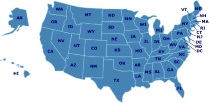
Looking for Another State?
Featured Resources
As an Amazon Associate, we earn from qualifying purchases. We get commissions for purchases made through links on this site.

Pass Your California DMV Test Guaranteed! 50 Real Test Questions! California DMV Handbook

And What About College?: How Homeschooling Can Lead to Admissions to the Best Colleges & Universities

Montessori: A Modern Approach
